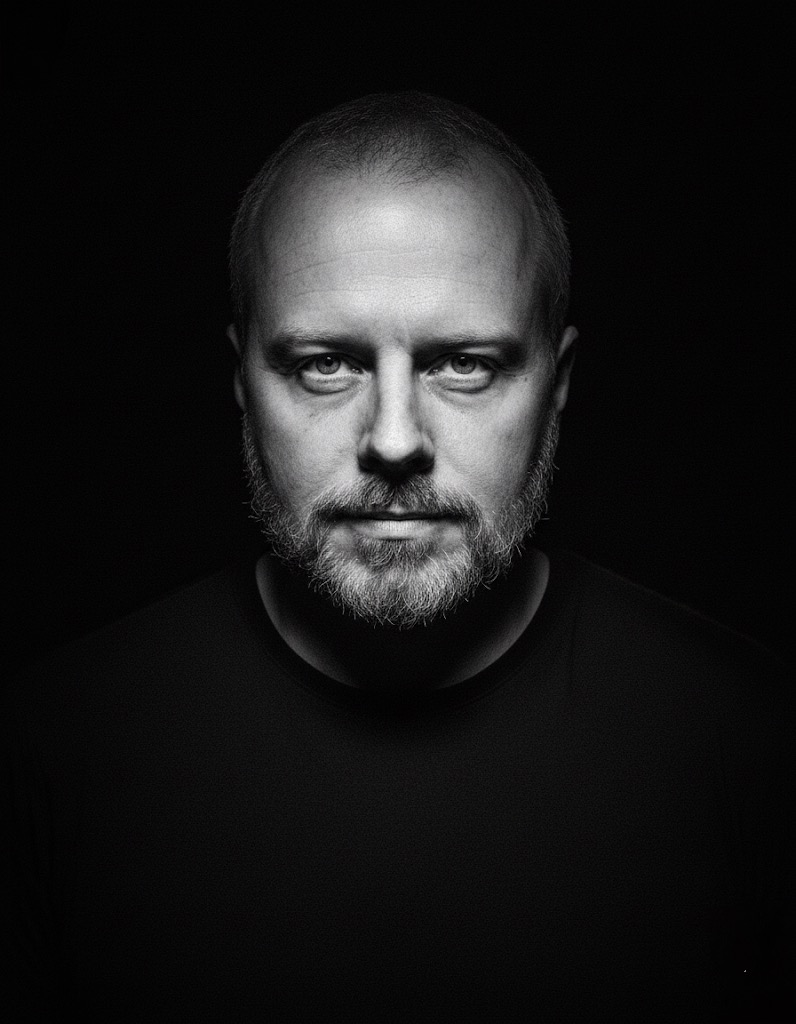
Mike Bartczak
I was born in July '77, and technology has followed me ever since. From my first encounter with computers in elementary school—simple lines of code on glowing black screens—to the ZX Spectrum, Commodore, and Atari, each machine opened a new door. I still remember the screech of cassette tapes loading games and, years later, the metallic song of modems connecting to the early internet.
Back then, copying tapes was its own economy. If you had the right friends and a double-deck recorder, you were rich—in games, at least. Nobody talked about copyrights. We just wanted to play, explore, and see what these strange new machines could do.
As the years went on, the machines grew up, and so did I. From PCs to Apple, from local software to the first cloud tools, I was building—SaaS products, e-commerce, cloud solutions. But the real turning point came in July 2015 when Ethereum went live. I already had a room full of Antminers working away at Bitcoin, but Ethereum was different. It wasn't just coins—it was a platform for developers. From that moment, blockchain became the core of my work.
I built data centers. I wrote my first smart contracts. I experimented with dApps long before most people knew the term. Eventually, all those experiments came together in my biggest creation so far: mOne, a non-custodial super-app that brings wallets, mini-apps, social tools, and now AI agents into one place.
Somewhere along the way, I found myself on stage—Berlin, Baku, Warsaw, Dubai, Buenos Aires. I've spoken at conferences and panels, sharing what I've learned and the sense of wonder that comes with being part of this constant transformation. To me, those talks aren't lectures—they're conversations, just like products are conversations.
I've never had a formal path into product building. Everything I know—design, coding, architecture, leading teams—I learned on my own. Most of it came through trial, error, and a long list of mistakes. But I realized that being self-taught isn't about knowing everything. It's about never stopping the process of learning.
The best ideas often appear when you cross disciplines. Psychology teaches me how people make choices. Economics explains how incentives shape behavior. Architecture shows me how structure guides experience. That's why I keep looking outside my own field—innovation rarely respects boundaries.
Nothing meaningful is ever built alone. Every product I've worked on resulted from close collaboration between internal teams and external partners. I partnered with RITE to turn ideas like Coinswap and Metapro into products. With Drift Masters, I built custom scoring systems and engagement tools for motorsport—where deadlines are sharp and mistakes are public. With Enginious, I learned to design economies inside mobile games. With Frenzy and ESE Entertainment, I planned digital strategies for global brands like Formula 1.
And my collaboration with Droids on Roids (now Apadmi) has been one of the longest journeys. What started as a simple non-custodial wallet evolved, over years, into mOne—a superapp that's now a social platform connecting communities as much as managing value.
The best work comes from combining strengths. My teams bring vision and ownership; partners bring fresh skills and new ways of thinking. When those forces meet, something unique happens—something none of us could build alone.
I think of product building as a conversation between human intention and machine capability. Where they overlap, technology begins to feel less like a tool and more like something you naturally interact with. I see technology as always serving people, not replacing them. The real focus is always human.
Now we're in the age of AI agents and autonomous systems. The machines are starting to talk back, to reason, to act independently. I don't lose sleep over that because I'm worried. I lose sleep because I can't stop thinking about the possibilities.
When I look at the arc of my life—from the ZX Spectrum to blockchain economies with autonomous agents—I see one unbroken story. Technology never stood still, and neither did I.